


Sunday, June 28, 2009
Carnival of the Africans 8
George Classen brings us a post from Prometheus Unbound, Taken by a charlatan, in which he comments on problems related to Danie Krugel. He takes particular joy laughing at Krugel's comment that what he himseld does is 'science, science, science.'
Leonie Joubert, gives us a cross-post from a piece she wrote for the South African Mail & Guardian called 'Pseudoscience: warts and all'. She recounts a childhood anecdote which resulted in her believing a strange pseudoscientific 'cure' for a wart on her knee. It's a good read.

Wednesday, June 24, 2009
Call - Carnival of the Africans
I had to remove my email address from this post as I began to receive emails from random spammers to my personal address soon after posting. This was highly frustrating and motivated me to change the 'submission' policy. Apologies.
Bowles, his Critics, The Price Equation, and Group Selection
All of this said, John Hawks makes a decent point about resource scarcity. He argues that Bowles claims that too much falls in the ambit of warfare. But, as far as I could see, Hawks chose to ignore Bowles's hedges. The problem, moreover, is that Hawks's argument does not seem consistent with the archaeological evidence. Consider the counterfactual, if resource scarcity and population growth mediate each other to the extent that Hawks argues they do, then the fossil evidence for inter-group violence should be minimal, or, if inter-group conflict did occur, why would it necessarily be violent or widespread? The fossil evidence indicates the contrary, as does more recent anthropological evidence of hunter-gatherer groups. Now, I admit that this is not my area of expertise, but it seems apparent to me that warfare could constitute an explanation, especially in conjunction with the evidence on resource scarcity.
This brings us to a further criticism. What about Occam's Razor, is the explanation sufficiently parsimonious? Are we offering too many inter-linked factors to explain the surprising existence of sociality in humans? Let me respond as follows. Many, many explanations of cooperation have arisen with many more inter-linked factors arising to explain cooperation. But, we are engaged in an effort to try to reduce the number of explanations into separate cultural and genetic phenomena. Bowles offers one such explanation considering the environmental factors, and gene-culture co-evolution. Evolution, in this sense, is the underlying parsimonious theory with theorists trying to understand the specific parameters that need to be appropriately tooled to apprehend the eventual evolution of something as seemingly counterintuitive as - and as prevalent as - cooperation.
I hope this post adds some clarity to the debate for those of you who are interested. I also admit that I am probably quite partisan in this debate because Sam Bowles is a professor of mine at the University of Siena and, though I disagree with some of his arguments, I find those promoting the role of inter-group violence in human history quite convincing.
Bowles, S. 2006. Group competition, reproductive leveling, and the evolution of human altruism, Science 314: 1569 - 1572 DOI: 10.1126/science.1134829
Dawkins, R, 2005, The Ancestor's Tale, Audiobook, Abridged and read by Richard Dawkins and Lalla Ward, Orion.
Price, G.R., 1970, 'Selection and Covariance', Nature 227: 520-521
Price, G.R. 1972, 'Fisher's 'Fundamental Theorem' made clear', Annals of Human Genetics, 36:129-140.
Rowthorn, R, 2006, 'The evolution of altruism between siblings: Hamilton’s rule revisited', Journal of Theoretical Biology, 24: 774–790
Thursday, June 18, 2009
Economist - food prices


William Zinsser - Writing About Your Life -

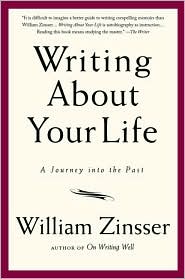
With Writing About Your Life - a pleasurable and instructional book - Zinsser brandishes his skill with words, while exposing the practice required to hone such skill. He focuses on writing memoir. He maps the challenges you face when writing a memoir and he provides tactics to avoid common problems, to improve your focus, and to clarify your intentions. He makes a case study of several texts along the way, drawing on his own writing and his experiences interviewing other writers such as Frank McCourt, Annie Dillard, Toni Morrison, and many others. The book is well-rounded, incorporating Zinsser's peculiar take on a life lived well, on God, on writing as career and passion, and on appreciation of commonplace beauty. This is the second book by Zinsser that I've read and I plan to read his other books. In particular, he refers to a book he edited, Inventing the Truth, in which several writers contribute their opinions and advice on writing memoir (including those authors listed above), which I now intend to read.
I am not centrally interested in writing memoir, but I am motivated to write semi-autobiographical fiction, and writing that biographies my extended family. Zinsser's Writing About Your Life contributes valuably to that pursuit as much as it does to memoir-writing because many of the same strategies and insights remain true. Moreover, the strategies would hold for poetry in which I might choose to focus on those close to me: getting the facts right, keeping the images accurate and concrete, evoking the sound, smell, and sense of a place, or a person makes all the difference in the condensed purity of a poem. Most crucially, Zinsser advocates writing honestly and without judgment, or, if you choose to judge those about whom you write, then do so humbly and forgivingly. He laments the plethora of memoir-cum-attacks written in the 90s when people profited off of the pain of their families, with Jerry Springer-inspired TV action to promote their books. He argues that this kind of memoir is best left behind. Write honestly, faithfully, and forgivingly (of yourself and others) and you will have a beautifully written book.
I saw upon searching online for Writing About Your Life that Zinsser has a new book, Writing Places, which was published on June 1st in the UK. I will probably wait for the paperback to be released, before I read it. I will review it and tell you whether it lives up to his previous standards of writing.
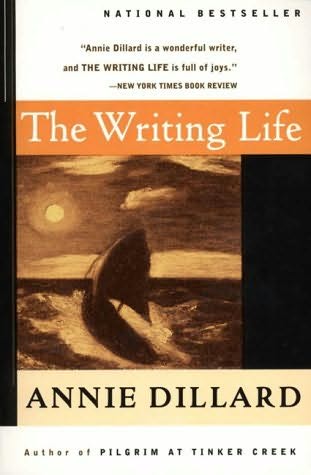 Annie Dillard - The Writing Life -
Annie Dillard, author of several fiction and non-fiction books, has been recommended to me numerous times by many authors, the first of which was Deirdre McCloskey in her Economical Writing. As with many things, intention finally met reality and I was content.
Dillard meditates on the processes of writing, doing so without sentimentality or harshness. She imparts the lore of writing, showing the toil required to obtain quality: the labour to unearth the ore, the vision to ensure its purity, the sweat of crafting and re-crafting.
The book enchanted me, it compelled me to read it. I was meant to be studying for exams or to be writing myself, but instead I began to read it. It was not difficult, I used it as a break time pleasure. The book is slim, it curves alluringly in your hand when you read it. It demands to be read. I had about ten pages to go while I was in bed reading, but I realised that in my fatigue I was missing some of the rhythms, losing the lyric in the prose. I put it aside until the next morning when I sat outside to read the last few pages in the morning sun. What a pleasure. What a joy. What a reminder of the burden and the privilege of writing.
I have not read any of Dillard's other books. I now intend to read as many of them as I can buy, or find in libraries once Amy and I are in the UK, or even while we are in SA and I can frequent the Rondebosch Library. I will report on them later.

Professor Peter N. Stearns - A Brief History of the World [The Teaching Company - Audio Lecture Series]
There was much to appreciate and much to frustrate in this series of lectures by Prof Stearns. Let me explain that I am a novice when it comes to world history, I have read Guns, Germs, and Steel, I have read various history books here and there, in particular as they relate to institutional evolution (consider here Douglas North, Friedrich Hayek), but I am far from an expert. When he conveyed content, Professor Stearns was interesting, and thus the course was. When he was wordy, tried desperately to justify the 'role' of world history, or giving lengthy disclaimers before explaining things, he became boring, the tempo of the course dropped, and my interest lagged a bit. A side concern was his frustrating use of language, we don't need to be told things are 'obvious' and people really don't 'utilize' things as often as he says they do, they 'use' them.
Nevertheless, let me highlight a few of the things I found fun and interesting. First, he described how Mansa Musa, during his trip to Mecca, destabilized the Egyptian economy because he carried so much gold with him. The Egyptians recovered when Musa left. Second, with the advent of Enlightenment the institutions that people employed for things that were lost was very interesting, prior to Enlightenment people hired 'Cunningmen' who were magical, savant-like individuals who would 'find' your good for a fee (somehow). After the Enlightenment, barely a century after widespread use of Cunningmen, Lost and Found centres popped up around cities and people would go to these if they lost something, rather than resorting to magical beliefs. Another interesting tidbit he recounts was how China and India were the two largest recipients of New World (South American) silver. Why? Prior to the development of high quality manufacturing in Western Europe, the Western European countries wanted the high quality garments, crockery, and many other goods that were produced by the Chinese and the Indians. Finally, as a last fun fact, Stearns describes how opium was the most widely traded good in the 18th century. I knew previously that it was an important good, and that its trade sparked the Opium Wars in China, but I had not realised how dreadfully important its trade was to the Brits and how widespread its consumption was (then again, having read the Romantics, I should have known, ahhh... laudanum).
Because of my interests in the evolution of institutions, or moving toward a theory of what Talcott Parsons calls 'evolutionary universals', I don't believe that Stearns play up enough the strange dynamics of the neolithic transition. The neolithic transition did horrific things to human nutrition. Quite aside from the closer proximity with animals and people that resulted in greater exposure to germs, humans were much more poorly fed. Agriculture resulted in decreases in height, similar decreases in weight, weaker bones, and all kinds of other odd results, results that we would not immediately think would enhance fitness. Stearns also didn't mention at all the advent of private property, which probably occurred around the same time as the neolithic transition: being able to plant stuff on 'your land' was only so good if you could store 'your' stuff and differentiate it from 'other peoples'' stuff.
Still, I felt educated by listening to the lectures. Stearns, when he discusses actual content, teaches well and exposes his 'obvious' breadth of knowledge. I learned a substantial number of facts, as well as more about the trends in non-Western civilizations, an area in which my knowledge is limited. Like most people of South African Anglo-Saxon heritage, my formal history included spates of Western Civilization with some South African history thrown in, embodied by recurrent encounters with Khoi-San history, the Mfecane, and the Groot Trek. I believe that the course offers a decent supplement to books like Jared Diamond'd Guns, Germs, and Steel, though only introducing the relevant topics and leaving deeper analysis and reading to the interested listener.
Fiction & Memoir
 Kurt Vonnegut - Slaughterhouse 5
Slaughterhouse 5 is one of those books I had intended to read for ages, then I took one of those silly facebook quizzes and it told me 'as a book you are Slaughterhous 5'. I had to read it. It is strange indeed. I would not want to listen to it as an audiobook: Vonnegut bounds around t the timeline like a rabbit on cocaine, it's 1967, then it's 1944, then he's in no-time in Tralfamadore being inspected by aliens. To listen to this would probably the closest I'd come to a psychadelic experience.
Nevertheless, in the written form it is spectacular and it launched itself easily into a place next to my other favoured anti-war books (Catch 22, All Quiet on the Western Front, A Farewell to Arms). Like Catch 22 it is humorous, yet simultaneously dreadfully sad. The image of emaciated Billy Pilgirm in a poorly fitting fur-lined coat turned to waistcoat, silver stage boots for Cinderella and wandering through the bombed wasteland of Dresden makes phenomenal satire - you become confused with your simultaneous urges to cry and to laugh. Incoherent laugh-sobbing wouldn't be inappropriate.
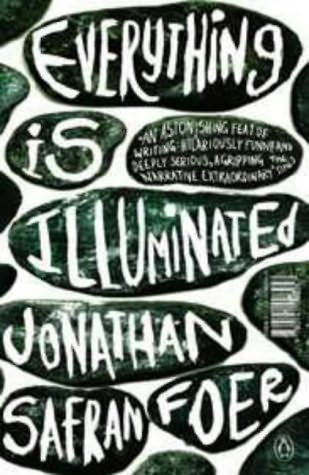 Jonathan Safran Foer - Everything is Illuminated
Previously, I read Jonathan Safran Foer's Extremely Loud and Incredibly Close and I thought it fantastic. Consequently, I read Foer's books in reverse order. I did not enjoy Everything is Illuminated as much as I had hoped I would.
The author conjures three different wisps of a story: the first involves letters sent from Alex, a Ukrainian teenager working in his father's tour business, to Foer. The second comprises Alex's recounting of Foer's quest to discover his grandfather's origins in the shtetl of Trachimbrod. These two strains succeed well, driven mainly by Alex's strange yet systematic errors in English because of his abuse of a thesaurus, as Alex comments, "I fatigued the thesaurus you presented me, as you counseled me to, when my words appeared petite, or not befitting." The third strain didn't appeal to me at all. Foer tries to invoke a kind of magical realist history of Trachimbrod, of his grandfather, and of his ancestors. I found it weak. I inevitably wanted to read past these sections to arrive at the sections when Alex wrote his letters, or wrote his own stories for Foer. The third strain made it seem like Foer was trying to be too clever, trying to ruminate too obviously on themes of memory, dream, and sexuality. Consequently, I did not enjoy Everything is Illuminated as much as I enjoyed Extremely Loud and Incredibly Close.

Frank McCourt - Angela's Ashes: A Memoir [Audiobook]
The voice of an old Irishman, Frank McCourt, tells the story of a young American boy of Irish descent, his journey to Ireland with his beleaguered family, and his eventual return to the United States. Frank McCourt reads Angela's Ashes enchantingly, his voice mellifluous and resonant. He sings the songs of woe, liberty and battle, he chants the poetry, he accents the speech so that each character's 'Och' is unique yet conveys the essential Irishness that the memoir captures so well.
In Angela's Ashes, McCourt triumphs because he writes with the voice of a child, presenting his child-self in such a way that makes the voice credible, that justifies his actions. In the audiobook this is complemented by his reading because his tone, his pitch, and his manner change consistent with how he wrote.
The story wrenches you from laughter to shivers of hunger (you feel persistently hungry reading this book) to a moistening of the eyes. The 'Disease of the Irish' plays a substantial part in this book, how it affects families, how the culture impelled its boys to embrace the bottle of stout, the evening pint. McCourt engages too with the notions of the Irish state, the politics of liberty from the British, and how the class structure of Ireland, with its correlates of Catholicism and Protestantism, abutted working class sensibilities.
The book works because McCourt writes honestly, yet forgivingly of his family and himself. I would strongly recommend Angela's Ashes as a first step into memoir if you have not read much memoir. I would also recommend listening to the audiobook to hear McCourt's voice, to hear his cries, his 'och's, his singing, and his emotion underpinning the narrative.
Conversations with Amy
I thought I'd try to introduce another new facet to these book discussions by telling you what my wife, Amy, thought about the books, and what we concluded together in discussions. Sometimes these chats will inform how the reviews themselves evolve, other times I'll review and then report on Amy's thoughts later.
Amy read Sebastian Beaumont's Thirteen (which I commented on previously), she enjoyed it, but not as much as I did. She thought that it was good, but not as good as my review made it seem. She took longer than than my day-and-a-bit to read it though, which I think contributed to the differing levels of enjoyment. Two central themes in the book are relevant here: trance states and memory. For me, reading it quickly was like invoking a trance state to read the book 'as intended'. Because Amy read the book only of an evening having worked hard during the day, she did not enter the book in the same way. At least this is my current null hypothesis. I await discussions with other people who read it quickly or slowly.
Amy also agreed with my assessment of Foer trying to be too clever in Everything is Illuminated. She also ranks Extremely Loud above Everything. That said, we enjoyed how we both laughed out loud while reading Extremely, which potentially means that my three stars rating is a bit harsh, maybe the book is worth more, probably four stars would be justified. Of the reviews that I read recently, many gush about Foer's genius while other's claim that he's a hack. I wouldn't go as far as either of those extremes, but I would say that he's creative and someone to watch.
Sunday, June 14, 2009
Ehrenreich - Too Poor to Make the News
Because of the depths of poverty in South Africa, and many other African & Asian economies, I don't sympathise enough with discussions of 'poverty' in the developed world. I think that the kinds of poverty are different, are culturally embedded, and often reach different depths of privation on different scales. Moreover, and particularly in the US, the persistence of inequality over time is immense, yet still people believe that America is the 'land of opportunity'. The rose-tinted opportunity glasses inure them to the poverty, and they remain enamoured of the systems that entrench it (evidenced by GOP behaviour regularly of late in the furour over health care reform).

Wednesday, June 10, 2009
Was there a Hawthorne Effect?
 An article in this week's Economist covers a recent paper by Steve Levitt and John List where they investigate the data from the original factory studies that elicited the so-called 'Hawthorne Effect'. The basic idea of the Hawthorne Effect was that being studied directly affected the productivity of the women in the factory. It turns out the effects may not have been so strong, if it even existed at all. Levitt and List found that the light intensity was changed on a Monday. The original researchers then compared Monday's productivity with Saturday's productivity, and unsurprisingly there was an increase. What they didn't do was compare Monday's productivity with the lights changed to any other Monday. Levitt and List found a systematic decrease in productivity as the week progressed which had nothing to do with being experimented upon.
I plan to read the research paper after my exams finish. I will comment on it more comprehensively then. Though there may not have been a Hawthorne Effect, demand effects or demand characteristics (as they are called in psychology) are fairly well-documented with higher quality data and better research protocols than were adhered to in the Hawthorne studies. Nevertheless, that the 'Hawthorne Effect' didn't exist as we believed is a pretty big finding. Well done Levitt and List.
Wednesday, June 03, 2009
SALDRU Affiliate
 I am now a research affiliate for the Southern Africa Labour and Development Research Unit (SALDRU) based at the University of Cape Town. I worked with SALDRU previously when I was in Cape Town, working on the Quality of Life Survey (a survey of land reform projects in South Africa, which is still under embargo from the World Bank, more on this later this year when the data are released). With the upcoming release of the first wave of the National Income Dynamics Survey (NIDS) and several other researchers based at the unit, I am very happy to collaborate with the unit. Justine Burns and I are currently working on another draft of a working paper for SALDRU. She and I also have another project going on risk-aversion (more of which later). Hopefully you'll see more working papers from me pop up on the SALDRU page in the future.
Sunday, May 31, 2009
Leeson on Pirates
 Not too long ago, Peter Leeson published a paper, 'An-arggh-chy', on the internal governance structures of pirate societies in the 17th & 18th centuries. I recently presented the paper to my PhD class 'Institutions of the Capitalism' with Professor Sam Bowles. You can download my presentation here. Leeson produced a great piece of economic history, combining good discursive writing with high quality institutional analysis.
Leeson provides evidence to indicate that pirate ships ran with democratic institutions (elected captains and quartermasters), that they obeyed unanimously ratified constitutions, and that they had universal suffrage for crew members regardless of race or gender (approximately 25-30% of crews were black and they all had equal voting rights). If you have the time, read the paper, it is a highly commendable piece of work and should be relatively easy to read for the non-economist, though it may require you to look up some ideas like 'principal-agent problems'.
Saturday, May 30, 2009
Non-fiction
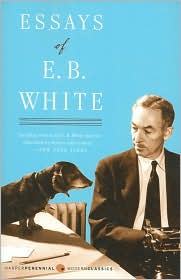 E.B. White - Essays of E.B. White -
I have seldom come across a book of essays that I want to read, re-read and read yet again. E.B. White's collection left me wondering if I could ever construct a piece of writing, essay or otherwise, to compare to the worst (least good?) in this collection. I think it unlikely. His writing conjures clear and beautiful images. With detailed descriptions of sounds and moments he brings his experiences to the present, to the moment when you read the essay. I found so many quotes in the novel that I wrote down either in my journal or on scraps of paper, laughing all the while, intrigued and hoping I could find essays or articles into which I could insert his crystalline depictions of moments, sentiments, and behaviours. I cannot recommend this book enough: find it, read it, realise how your writing can improve having read it.
 Tom Wolfe - The Right Stuff -
Whenever I mention this book to someone I seem to get the response, "It was such a great movie." Well, even if the movie was good, it can't be as good as the book. Wolfe commands 'the long sentence' (OK not Joyce-length, but long enough) while maintaining rhythm and pace, and driving you on to whatever comes next. The Right Stuff retells the stories of US space flight's early days, of the worship of those who became astronauts, of how they came from flight jockey stock. Wolfe shows us how the astronauts' history motivated them to do as much as they could to incorporate piloting into the space program, when what many scientists wanted instead was rats pushing levers. The book holds importance because of its relevance as an historical text, and because of its literariness. Wolfe's writing makes what might have been just a somewhat interesting story into a mythic tale of courage, training, perseverance, and 'the right stuff'. William Zinsser refers to the book in his On Writing Well, where he marvels at Wolfe's abilities with the long sentence. Zinsser quotes Wolfe as the exception to the 'brief and clear' general rule. Zinsser was correct, Tom Wolfe's The Right Stuff is the exception that proves the rule.
I am an atheist (as the big 'A' on the side of the blog announces). This is one of those books one is meant to read, it's in the atheistic canon if you will. I don't think that the book is as much about atheism, as it is about the dangers of extreme religiosity and the moderate religiosity that enables it. My feelings on this topic are conflicted, mainly because I favour religious practices because they contribute to the formation and maintenance of social capital, but I have a problem with them for other reasons (not to be discussed here). Anyway, what I found interesting about Harris's book was the methodical attack on the position that Islam is a 'peaceful' religion and that practising Muslims have different views on what constitutes reality to more secularly inclined Jews and Christians. The litany of violence-promoting passages that Harris quotes from the Quran was devastating, I had not realised there were that many. Harris also attacks Christianity, and Christians, for their choosiness about passages to obey or not to obey. A part of the book I found interesting, and not 'new age' or 'non-atheistic' as some comment, was the final chapter where Harris discusses meditation and reflections on the self. I found the sentiments about the notion of reflecting on the self, while realising it is the self doing the reflecting to be pleasing (he refers to Eastern philosophers here, some of which I find coherent, some of which I don't). His discussion of torture was relevant to contemporary events, though I remained unconvinced because the evidence is conflicted on the 'confessions' of the tortured. Though interesting, the book was sometimes overwrought. Nevertheless it is timely. I think it is relevant mostly for promoting discussion and for arguing that religion should not be given precendence over secularism (say, tax exemptions for churches). That said, I found the book to be over-written. There are only so many times I can hear 'admit of' in a book written for the layperson in the 21st century. What was he thinking? Instead of writing simply and clearly Harris often used strange and obtuse language. This indicates either a bad editor, or an obdurate writer. I get the sense Harris might be just a bit obdurate. Nevertheless, the book is worth reading to clarify those points with which you agree, and those with which you do not.
 Howard Zinn - A People's History of the United States [Audiobook]
Howard Zinn set out to produce an alternative representation of the history of the United States in this landmark, and rather (in)famous book. (Some) Conservatives detest it. Leftists (tend to) love it. That said, some of his most vociferous critics are on the left. Zinn makes the point that most histories are often about Big Men, normally White and Christian. But, there have been many other big people involved, women, men, black, white, hispanic, native American, LGBT, and more. He believes that a great gap exists in most American histories of the activities of the 'people' qua public, and that many historians ignore collective action as a driver of change. I sympathise with this view. As much as single people matter, there are many who fall by the wayside having done their bit, others who contine to work in the shadows, who write (and send!) letters, raise money, carry placards, and generally show their discontent with the status quo. What makes the book even better is that Zinn is quite up front about the failings of the book, he knows and admits that he predominantly ignores the 'big people' (though he recognises their occasional follies and successes). Zinn admits too that in earlier editions of the book he didn't pay sufficient attention to LGBT people and to their suffering, their mass movements. But, having done so, he gives us access to a story of collective action and mobilisation that is remarkable, and that distinguishes the book from many other histories that I have read. The audiobook only covered the second half of the print book, which focused on the 20th century and its movements in the US. What made the audiobook even more enjoyable was that Matt Damon read it, and he was a better reader than I expected him to be - the Harvard dropout continues to entertain and learn it seems. Anyway, I would definitely recommend this book, but with a caveat, make sure you read (or listen to) other histories of the US that focus on the 'big men' (mostly DWMs), or histories that provide more conservative views on the country and its peoples. With History, who tells and what they tell as a consequence are very important. If you have only read 'big people' and conservative histories, then be sure to read this as an important complement.
Fiction
 David Leavitt - Martin Bauman
Wow. If ever a book captured the pettiness of humanity, this was it. The characters are petty, the storyline is petty, it's all just petty. Leavitt obviously has a strong command of the English language, and he appears capable of chiselling beautiful sentences from dreck, but the book left me dreadfully annoyed. I read and I read in the hope that a likeable character would appear. One did. I read too in the expectation that something consequential would occur. Expectation unmet. Supposedly, the book was a semi-autobiographical confession. If that is the case, I would have expected genuine contrition or something resembling true apology. There were no genuine apologies or any exculpatory passages; the attempts were thin, lacking substance, they sounded like the protests of a chastised child. Martin Bauman annoyed me. I wouldn't bother. I give it two stars for the occasional beautiful sentence that grew out of the muck.
 Roberto Bolano - 2666
I didn't finish it. I reached the second last section of the book and I couldn't read the phrase, 'She was anally and vaginally raped' any more. I understand that Bolano tried to depict the different hues of corruption - personal, political, thematic, and others. But, I couldn't find the will to continue reading. This didn't worry me too much. I enjoyed the second and third sections of the book, but the first and the fourth? No. I didn't get to the fifth. I also believe that the book generally required more serious editing, it required someone to examine it, cut it, shape it. Bolano didn't live long enough to do it himself. I believe that the point (as much as it could be isolated) could have been conveyed in many fewer words and with more grace. I can neither recommend nor discourage the reading of 2666 - any pleasure from this one is probably (and largely) intellectual. It wasn't enough for me. I admit that I was disappointed after all the hype. Oddly enough, from the reviews I read it seemed much better received in the US than it was in the UK.
Kate Atkinson - When Will There Be Good News

I enjoyed Atkinson's previous book, One Good Turn, also featuring her character Jackson Brodie. Brodie doesn't feature too greatly in this novel, though his position is crucial. The book is set in Scotland and plays around a character, Joanna, whose family was murdered when she was a child. Atkinson writes with characteristics literariness, yet she maintains a velocity in the events that kept me entertained. I appreciated her characterisation of Joanna's behaviour with her baby - the reciting of nursery rhymes that I recall from my childhood (my Liverpudlian grandmother recited similar rhymes to me). Reggie, Joanna's 'mother's assistant', is a determined orphan set on getting her A-levels and acts the part of detective, she's accompanied by another character from Atkinson's previous book, DCI Louise, who keeps us entertained with her cynicism and her fervent aggression towards her in-laws. With a series of coincidences and errors woven together the tale reaches its finale. It was a fun read, and kept me going while studying. I always need fiction, this was a humorous, romping-three-star-movie equivalent. I don't believe it was as good as Atkinson's previous novel.
 Sebastian Beaumont - Thirteen 1/2
I devoured Thirteen in two days. Stephen Bardot, a taxi-driving, failed businessman reflects on the world while driving his taxi. The world, time, and space, however, seem to do strange things once he has reached a dreadful enough level of fatigue: plastic bags become rabbits in a sideways glance, a house, once there, disappears. But the people he meets in this alternative reality seem to be present in his own world, to be recognised by people he knows to be real, to be able to affect him in ways that he didn't believe possible. Having read it so quickly, I almost feel like I should go back and re-read it to see if there are clues I missed, hints dropped that I did not pick up. One of the few things I did not like about it was the author's use of italics on words that did not I believe require them. The ways he constructed the sentences naturally gave the words emphasis, then he gave them additional emphasis with italics. I didn't get it, I don't get it. The book was recommended to me by Amazon's 'you liked that book, you might like this one' algorithm. I appreciate Haruki Murakami, and consequently Amazon recommended Beaumont's Thirteen. Have a look for it if you appreciate books combining the surreal with psychological drama.