


Friday, July 18, 2008
Steve Fuller - Who Needs the Humanities
Adam Smith's Lost Legacy - Adam Smith 'Chill Out'?
The Economist - Africa Shines
Jeff Frankel - "No Atheists in Foxholes" - No Libertarians in Financial Crises
TNR - Dead Left: Shock Doctrine Review
EurekAlert - Natural Selection may not produce the best organisms
Adam Smith's Lost Legacy - Adam Smith 'Chill Out'?
The Economist - Africa Shines
Jeff Frankel - "No Atheists in Foxholes" - No Libertarians in Financial Crises
TNR - Dead Left: Shock Doctrine Review
EurekAlert - Natural Selection may not produce the best organisms

Thursday, July 17, 2008
Thaler, Libertarian Paternalism & Ed Glaeser
Posted by Simon Halliday | Thursday, July 17, 2008 | Category:
|
0
comments

Mike suggested I take a look at this Guardian article on Richard Thaler. So hat-tip to him. I am still quite undecided about the issues that Thaler and Cass Sunstein have uncovered in terms of using human behavioural characteristics 'for their own good'. Though I am not a libertarian, I share the profoundly libertarian scepticism of the ability of government to decide what should be 'the good'. If the good remains democratically decided then I am all for it, if the decisions around it and the methods used to manipulate it become subservient to malign intentions then I am definitely not in favour of it.
Russ Roberts, at EconTalk, has had a show with Richard Thaler (here) and one with one of Thaler's chief critics, Edward Glaeser (here). You can read Sunstein and Thaler's two articles, the first for the AER and the second for the University of Chicago Law Review. Here you can access three of Glaeser's critiques, the first for Regulation, the second is for the Harvard Institute of Economic Research as is the third. Russ Roberts also recommends that we should take a look at John Stuart Mill's On Liberty, specifically Chapter IV in order to contemplate the limits of authority of society over the in
 dividual.
 Anyway, as long as the good is maintained under democratic control. As long as people realise that which is better for them and instruct government to implement policy in order to 'Nudge' them then I am all for it. As I said previously though, I am definitely not in favour of nudges by government when we don't even know what government, or politicians trying to be elected, might be doing. I suppose this is the Orwellian side of my thinking when I worry about government controlling aspects of our lives, abusing our psychological predispositions and using them to control us.
Glaeser makes the point well when he says, "if humans make mistakes in market transactions then they will make at least as many mistakes when electing representatives, and those representatives will make mistakes when policymaking." (Glaeser, 2006:1) Glaeser refers to differences in levels of 'indoctrination' by governments using the US and Europe as two case studies. In work with Alberto Alesina, they find that:
60 percent of Americans believe that the poor are lazy, but only 26 percent of Europeans share that view. By contrast, 60 percent of Europeans think that the poor are trapped in poverty, but only 29 percent of Americans share that opinion. In reality, the American poor generally work harder than their European counterparts and have a lower probability of exiting from poverty.This may seem a bit conspiracy nuttish, but I believe that it is probably a fairly accurate portrayal of the political mentalities in these two different areas generally.
(Glaeser, 2006:33)
What I don't agree with though are the conclusions that Glaeser draws from these insights into human nature. He argues that conservatism is the way forward - marginal adjustments to already existing policy give voters a better basis of for understanding new policy. My problem with this is that it doesn't acknowledge the work of people like Dan Ariely (on whom I blogged recently). Specifically, what I call the 'ugly buddy' effect. If you're going out to a bar and you want someone to be attracted to you, you should take someone who looks similar to you, but who you know is ranked below you in terms of 'attractiveness'. I don't see why we shouldn't have an analog of this in terms of how we relate to policy. Conservatives could then basically make the existing policy the 'ugly buddy' and ensure that the new policy is similar, but just that bit more attractive when what we as voters might really want, but not realise we want, is some other policy entirely that looks like neither the 'ugly' or the more attractively dressed-up old policy.

Either way, taking note of this work across the whole range of behavioural economics and using it to gain broader insights into how we operate is a good idea. Taking the work of only one economist and only one critic however, is not, in my mind, a great idea and I hope that the Obamas and the Camerons of the political world take this to heart and don't go too 'Guru' on us. I expect Obama won't. I am more sceptical of Cameron (these are my Labour Party roots talking - my grandmother was a staunch labour supporter & my aunt works for the Labour party). Anyway, be sceptical. Use the insights. Don't take the politicians too seriously. Wait... that's a bit cynical...
Wednesday, July 16, 2008
What a wonderful resource! Transcripts of the Tanner Lectures, without having to pay!
Accessible at the Tanner Lecture Library at the University of Utah.
Accessible at the Tanner Lecture Library at the University of Utah.
The euro and increase in trade - vox EU
Obama's Foreign Policy Speech
A secret succession order for the US Presidency - Slate
Supposedly, New ANC Leaders not a bunch of leftists - M&G (I'm somewhat skepti cal)
cal)
And, slightly sillier & because I sang in a cappella groups Last Night a Beat Box Saved My Life - please read it - Slate
From Science Daily - Overweight mothers give birth to offspring who become even heavier
Olivia Judson - Get rid of Darwinism
Obama's Foreign Policy Speech
A secret succession order for the US Presidency - Slate
Supposedly, New ANC Leaders not a bunch of leftists - M&G (I'm somewhat skepti
cal)And, slightly sillier & because I sang in a cappella groups Last Night a Beat Box Saved My Life - please read it - Slate
From Science Daily - Overweight mothers give birth to offspring who become even heavier
Olivia Judson - Get rid of Darwinism
 John List reviews work on experiments in the most recent issue of Science. The paper is available in the perspectives section of the journal (gated). It is a very short article, basically one page, but in this short time he summarizes the themes and the drives for fieldwork, and for complementary laboratory work, in economics.
The article summarizes motivations behind the work well, obviously using some of List's own work. Were it anyone less capable writing the article and citing their own work I'd be a bit more sceptical, but List is a mammoth when it comes to understanding and working with field experiments. He also references James J. Heckman, on whom I commented recently in my discussions of education. Heckman (Nobel Laureate) has done substantial amounts of work in Education and Econometrics. The Econometrically inclined Heckman is the one he references using Heckman's forthcoming discussion of the understanding of causation.
A brief comment on List, he is one of the most prolific writers in economics that you will ever come across. You experience one of those genuine, 'How the hell does he do it, does he sleep, ever?' moments when you view his publications page.
I would recommend that anyone interested in a basic understanding of fieldwork have a look at the Science paper, it offers some good insights into the method.
Tuesday, July 15, 2008
is fantastic. And not only because of his considered opinion on economic forces, such as this recent comment on McCain's proposed policies.
Reasons I like BDL:
He quotes Spiderman... so cool.
Other facts: he is a professor of Economics at UC Berkeley, he used to think of himself as a 'bipartisan centrist', (along with Paul Krugman) not so much any more (for either of them), he has written numerous brilliant articles (see this for a comment on human felicity) and some good textbooks (I have his Macro text).
Reasons I like BDL:
- He reads science fiction and fantasy.
- He has rules on watching Star Wars.
- He gets invited to talk shows with random conservatives and has to yell about it (though he hates yelling).
- His comments on the Death Spiral of the media (Economist, NYT, WSJ...).
- His tireless work against torture by the US government.
- He has lectures available online.
- He supports Barack Obama.
- He'd like the republicans to get better candidates.
- He teaches economic history.
- Oh yes... of course, he's a good macroeconomist. One forgets amidst all the cool.
He quotes Spiderman... so cool.
Other facts: he is a professor of Economics at UC Berkeley, he used to think of himself as a 'bipartisan centrist', (along with Paul Krugman) not so much any more (for either of them), he has written numerous brilliant articles (see this for a comment on human felicity) and some good textbooks (I have his Macro text).
Monday, July 14, 2008
The Libertarian Candidate Pt. 2
Posted by Simon Halliday | Monday, July 14, 2008 | Category:
libertarianism
|
0
comments
Some of you may have read my little rant when I first encountered Mike Munger's (the Libertarian Party candidate for North Carolina) youtube advert. Have a look down at the comments and you'll notice that Dr. Munger replied to my post. I won't hesitate to say that I found this a bit surprising, but I took up his challenge. I watched the whole speech that he gave at the convention, rather than the clips from the advert as well. I read each of the sections from his 'Issues' page on his website, as well as several other things on his site.

Anyway, I agree with a number of his policies. I don't believe that, for me, he goes into enough detail for the implementation of some of his policies. For example, although I believe his education policy is interesting and could be good for North Carolina, I don't believe that changing education alone is likely to alter the outcomes for poor individuals living in North Carolina. He does not comment (on the website that is) on the relevance of neighbourhood effects, as discussed by the famous libertarian Milton Friedman, as a constraint on alleviating poverty in his book Capitalism and Freedom. I know that this is largely a problem for the more academically inclined individual, but I believe that it is and will be, one of the persistent barriers to overcome poverty, particularly because it is difficult to intervene neighbourhood dynamics and social networks. Moreover, this could be a particularly difficult area for libertarians to intervene in because of the sacrosanct nature of liberty to them - why should an individual include others in their social circle when it would (in terms of economic benefits) be entirely to the benefit of the other individual and probably not to the individual libertarian who is sharing the superior social networks? I think Ayn Rand would probably have a hernia, or at least she'd definitely turn in her grave.
I was really glad that Dr. Munger replied to me. I think that his positions on the death penalty, victimless crimes, marriage, election reform, corporate welfare and school choice are all fantastic. I cannot legitimately comment on his positions on eminent domain and annexation as I do not know enough of the background in North Carolina, or US federal law. Regardless, the Democrats and the Republicans could take a page from his book.
Do I think though that libertarianism is the solution for a country such as South Africa? Well that's another story entirely. I don't really, but that we can discuss on another day in the not too distant future.
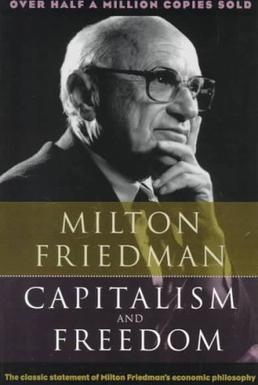
Anyway, I agree with a number of his policies. I don't believe that, for me, he goes into enough detail for the implementation of some of his policies. For example, although I believe his education policy is interesting and could be good for North Carolina, I don't believe that changing education alone is likely to alter the outcomes for poor individuals living in North Carolina. He does not comment (on the website that is) on the relevance of neighbourhood effects, as discussed by the famous libertarian Milton Friedman, as a constraint on alleviating poverty in his book Capitalism and Freedom. I know that this is largely a problem for the more academically inclined individual, but I believe that it is and will be, one of the persistent barriers to overcome poverty, particularly because it is difficult to intervene neighbourhood dynamics and social networks. Moreover, this could be a particularly difficult area for libertarians to intervene in because of the sacrosanct nature of liberty to them - why should an individual include others in their social circle when it would (in terms of economic benefits) be entirely to the benefit of the other individual and probably not to the individual libertarian who is sharing the superior social networks? I think Ayn Rand would probably have a hernia, or at least she'd definitely turn in her grave.
I was really glad that Dr. Munger replied to me. I think that his positions on the death penalty, victimless crimes, marriage, election reform, corporate welfare and school choice are all fantastic. I cannot legitimately comment on his positions on eminent domain and annexation as I do not know enough of the background in North Carolina, or US federal law. Regardless, the Democrats and the Republicans could take a page from his book.
Do I think though that libertarianism is the solution for a country such as South Africa? Well that's another story entirely. I don't really, but that we can discuss on another day in the not too distant future.
Dan Ariely, author of Predictably Irrational presents one of the talks for Google.
I have not (sadly) read his book, but I have encountered some of the papers that he discusses. I think that the cheating/shredding stuff is fantastic. I think that the idea of human 'fudging' is quite accurate and I believe that the idea for how this can expand in terms of how 'distant' individuals see themselves as being from actual monetary transactions will make a difference in how these individuals behave with respect to these transactions. He mentions the problems of Enron and the Subprime Mortgage Crisis.
Does anyone have any particularly perspectives on this? I'd love them to do experiments with teenagers and discussing alcohol consumption - "I had such a bender bru, I drank X beers." or something along those lines. How many did they actually drink? Or, "I scored X chicks man, I'm such a stud." Really? How so? Or, possibly more typically, "Yes man, we got to X base. It was frigging great."
What makes this kind of thing odd for me is that I like to think that I am (fairly) honest, and I like to believe that other people are too. I really, really don't like trying to bargain at the market, for example. Which is probably why I rarely, if ever, by anything at markets because I so dislike this kind of 'fudging' of prices in terms of the actual value of something (is this a misappropriation of the idea, it's late...).
Anyway, cool video, have a look.
Note that previously I had no idea about these fantastic talks from Google. Hat tip to Mike for recommending them. Damn this stuff for avoiding writing and research! Maybe I can change the frame...
I have not (sadly) read his book, but I have encountered some of the papers that he discusses. I think that the cheating/shredding stuff is fantastic. I think that the idea of human 'fudging' is quite accurate and I believe that the idea for how this can expand in terms of how 'distant' individuals see themselves as being from actual monetary transactions will make a difference in how these individuals behave with respect to these transactions. He mentions the problems of Enron and the Subprime Mortgage Crisis.
Does anyone have any particularly perspectives on this? I'd love them to do experiments with teenagers and discussing alcohol consumption - "I had such a bender bru, I drank X beers." or something along those lines. How many did they actually drink? Or, "I scored X chicks man, I'm such a stud." Really? How so? Or, possibly more typically, "Yes man, we got to X base. It was frigging great."
What makes this kind of thing odd for me is that I like to think that I am (fairly) honest, and I like to believe that other people are too. I really, really don't like trying to bargain at the market, for example. Which is probably why I rarely, if ever, by anything at markets because I so dislike this kind of 'fudging' of prices in terms of the actual value of something (is this a misappropriation of the idea, it's late...).
Anyway, cool video, have a look.
Note that previously I had no idea about these fantastic talks from Google. Hat tip to Mike for recommending them. Damn this stuff for avoiding writing and research! Maybe I can change the frame...
Dave Ansara on Mantashe and the ANC vs. The People
Barack Obama's Op-Ed Piece on his Plan for Iraq
The G-Spot on Possible Democrat VPs
Patrick Madden on An Aphasic Proposition
Barack Obama's Op-Ed Piece on his Plan for Iraq
The G-Spot on Possible Democrat VPs
Patrick Madden on An Aphasic Proposition
Saturday, July 12, 2008
The Libertarian Candidate
Posted by Simon Halliday | Saturday, July 12, 2008 | Category:
equality,
Group Inequality,
libertarianism,
Political Philosophy
|
4
comments
Michael Munger's speech as a libertarian candidate for NC 08:
He says that libertarians are 'for giving people a chance to realise their full potential', but they are also 'for no one being able to take away the fruits of your labour'. How, therefore, do they propose making sure that everyone is able to realise their potential without taking away the fruits of some people's labour? It's logically inconceivable for them to be able to do both. You cannot have reasonable equality of opportunity without some kind of revenue system. Unless he is talking, simply about non-discrimination which cannot, by any stretch of the imagination, result in any system that is 'for giving people a chance to realise their full potential'.
We need to create a just society first. We can't just assume that society will self-correct. The evidence weighs in heavily against the libertarian ideal of social mobility exists in the United States, especially with the current distributions of wealth and education. Munger makes no comment on how society would allow individual flourishing, as something accessible to all Americans, without any taxes.
Munger comments on "A couple who live on land that they own. that they control and that they can defend." Who regulates what constitutes 'defence'? Moreover, he says later that individuals cannot inflict violence on one another, who would regulate this?
He says too that individuals would be able to drive cars because they own them, but would not have to carry licences. How do we ensure then that individuals have some minimal level of capability? Do we just assume that society is comprised of 'responsible individuals' as Munger wants us to? Has he met any teenage boys? As much as I would like to think that individuals would self-regulate, I have no empirical reason to do so.
If I am misconstruing what he says, or misunderstanding some crucial concept of libertarian theory then please help me to gain clarity.
He says that libertarians are 'for giving people a chance to realise their full potential', but they are also 'for no one being able to take away the fruits of your labour'. How, therefore, do they propose making sure that everyone is able to realise their potential without taking away the fruits of some people's labour? It's logically inconceivable for them to be able to do both. You cannot have reasonable equality of opportunity without some kind of revenue system. Unless he is talking, simply about non-discrimination which cannot, by any stretch of the imagination, result in any system that is 'for giving people a chance to realise their full potential'.
We need to create a just society first. We can't just assume that society will self-correct. The evidence weighs in heavily against the libertarian ideal of social mobility exists in the United States, especially with the current distributions of wealth and education. Munger makes no comment on how society would allow individual flourishing, as something accessible to all Americans, without any taxes.
Munger comments on "A couple who live on land that they own. that they control and that they can defend." Who regulates what constitutes 'defence'? Moreover, he says later that individuals cannot inflict violence on one another, who would regulate this?
He says too that individuals would be able to drive cars because they own them, but would not have to carry licences. How do we ensure then that individuals have some minimal level of capability? Do we just assume that society is comprised of 'responsible individuals' as Munger wants us to? Has he met any teenage boys? As much as I would like to think that individuals would self-regulate, I have no empirical reason to do so.
If I am misconstruing what he says, or misunderstanding some crucial concept of libertarian theory then please help me to gain clarity.
Friday, July 11, 2008
 Yesterday I commented on the pleasure I experienced reading Deirdre McCloskey's 'Economical Writing'. She recommended that everyone should read George Orwell. So I went back and re-read Orwell's essay 'Politics and the English Language'. I had read it a few years ago, but reading the McCloskey I was reminded how much writing, like any discipline, requires you to read good criticism, to read essays and books to improve your style.
 These days, writing in economics is often devoid of anything that could be called style (see McCloskey's reply to my email in the previous post). I wanted, therefore, to recommend to anyone who happens on this blog to read Orwell. In economics, read Akerlof, Galbraith, Leijonhufvud, Robinson, Schelling and Stigler. I am going to try to read more of their work. I love Akerlof's writing, and Schelling is sublime. Leijonhufvud is an entertaining and immense Scandinavian, it was a surprise to meet him having read his prose.
Moving on, I think that Glenn Loury is a good economist whose writing is well-informed and transdisciplinary. He is not as good a stylist as some of those above, but have a read of his essay 'Social Exclusion and Ethnic Groups: The Challenge to Economics'. This essay, and much of Loury's other writing, lured me onto the path of research into group inequality, more of which at a later date.
Final note: can anyone point me to contemporary economists, or economics writers, who they believe has good style? I wish to learn at the feet of contemporary masters, as much as at those of older writers.
Cohen Pt. 2
Posted by Simon Halliday | | Category:
Cohen,
equality,
Nozick,
Political Philosophy,
self-ownership
|
0
comments
 This is the second in my series of posts on G.A. Cohen's Self-Ownership, Freedom and Equality. The first post was on Nozick's Wilt Chamberlin example.
 A central argument in Nozick's Anarchy, State and Utopia is that a proletarian who has a choice between death by starvation and working for a capitalist is free as a consequence of self-ownership.
He argues, furthermore that joint ownership the world's resources (a typical socialist ideal) results in the nullification of self-ownership.
The two positions are as follows. For the first, consider a world in which there are individuals ranked throughout society, from the richest capitalist to the poorest proletarian, say a particularly rich hacienda-owner, Cortés, and the landless worker on the hacienda, Peone. Nozick argues that, as long as this distribution came about as a result of a Lockean Proviso-type land acquisition rule, then it is just. Both Cortés and Peone are self-owning and are 'free' to choose.

Contrast this with the second situation situation where two individuals are shipwrecked. Neither of them owns any land on the particularly lush and fertile island. The one individual was disabled in the ship-wreck, the other is able-bodied. Call them Able and Infirm. They decide to own the island jointly, such that neither can make production decisions without the other. As Able cannot produce without the permission of Infirm there are five possible outcomes (see Cohen, 1995:95 for the exact details). I discuss the two interesting outcomes.
iv) Able produces, the amount produced determined independent of his choice, and it exceeds the amount required to sustain both Able and Infirm. They bargain over this surplus.
v) Able can produce a surplus, but he can vary its size; bargaining takes place over both surplus and the amount produced.
 Depending on the disutility of labour for Able and the disutility of infirmity for Infirm we should get an egalitarian distribution of resources. Egalitarian because the distribution does not depend on Able's talents, he gets nothing 'extra' because it is him and not Infirm who is producing. (ibid, 96). However, what we see in this example is that, even though individuals are self-owning, Nozick would argue that Able does not have effective self-ownership. As Cohen points out, "joint world ownership renders nugatory the self-ownership with which we had hoped to combine it. Self-ownerships is not eliminated, but it is rendered useless." (ibid, 98)
Cohen's contribution to this argument is that either
1) Nozick wants individuals to have effective freedom, or
2) Nozick wants individuals to have self-ownership in name alone: formal self-ownership.
Cohen argues that Nozick has a double standard for judging joint-ownership against private ownership of unowned resources. For joint ownership, the individual has self-ownership but is not effectively self-owning contrasted with the situation where the proletarian must work for a capitalist or die, and thus also has self-ownership, but is not effectively self-owning. Either Nozick wants individuals to have effective self-ownership or formal self-ownership. Which is it?

The consequence of which is that we should probably understand that what Nozick actually wants individuals to have is autonomy: control over their own lives. Which, Cohen argues, implies that there must be constraints on individual self-ownership in order for individuals to have autonomy. This may seem counter-intuitive, but the examples described give us a fair understanding of what formal self-ownership vs. effective self-ownership actually mean.
Consequently, accepting autonomy as our goal requires not only an abandonment of Nozickian self-ownership, but also an abandonment of the traditional socialist precept of joint ownership of the world's resources.
Consequently, accepting autonomy as our goal requires not only an abandonment of Nozickian self-ownership, but also an abandonment of the traditional socialist precept of joint ownership of the world's resources.
Thursday, July 10, 2008
 Taking a break from Rawls this evening I read Deirdre McCloskey's Economical Writing (1985, written when she was still Donald). The article was entertaining and instructive. Even though I have completed my MA in Creative Writing I find it difficult nevertheless to apply the discipline that I gained in writing poetry to the writing of economics prose. McCloskey's article reminded me that there are many, many areas in which I can improve my writing (as much as I could improve one's skills in many areas of economics).
 She offered a list of economists whose writing she felt had stylistic merit. I wondered then, in the intervening twenty years, has the writing of economics on average lost style? Have we improved? Are there major stylists out there I should be reading?
I've sent her an email asking exactly this question. I have no idea whether she has either the time or the inclination to respond. Let's wait and see. I'll report back.
Reference:
Donald McCloskey, 1985, 'Economical Writing', Economic Inquiry, 23:2.
 So, this afternoon, I was sitting on the Piazza del Campo,
  reading John Rawls, while eating a lemon granita. Frigging fantastic.
 For those of you who don't know, Piazza del Campo is the piazza on which the Palazzo Pubblico in Siena is situated, where Lorenzetti's famous frescoes of good and bad governance are. Great location to do some political philosophy reading if you ask me. If I recall accurately both David Miller and Jonathan Wolff refer to the frescoes in their books, as does Sam Bowles.
Sweetness!

1) How would you define "atheism"?
Lack of belief in gods.
2) Was your upbringing religious? If so, what tradition?
Not particularly. Rather all over the place. My mum is Catholic by upbringing, my Dad Anglican, my step-father Anglican. However, all of them have done all kinds of random things, my folks (before divorce) had done TM and the Buddhist thing (incl going to Nepal). They were always very "whatever you choose for yourself."
3) How would you describe "Intelligent Design", using only one word?
Dangerous.
4) What scientific endeavor really excites you?
The science of networks, from the brain to people. Space travel! I've read too many comics and too much sci-fi...

5) If you could change one thing about the "atheist community", what would it be and why?
The introduction of atheist communities, like atheist "Sunday school" in South Africa, especially as an alternative for families and children.
6) If your child came up to you and said "I'm joining the clergy", what would be your first response?
I would do my best to accept it as their choice, but would try to convince them otherwise with rational, evidence and probability-based arguments.
7) What's your favorite theistic argument, and how do you usually refute it?
Pascal's Wager. Because then I can start talking about beliefs in flying teapots being as probabilistically relevant as a belief in a Christian god.
8) What's your most "controversial" (as far as general attitudes amongst other atheists goes) viewpoint?
Probably the atheist Sunday school argument, but I don't know as I don't think my beliefs are that controversial.
9) Of the "Four Horsemen" (Dawkins, Dennett, Hitchens and Harris) who is your favourite, and why?
Dawkins. The Selfish Gene, Climbing Mount Improbable and The God Delusion. Need I say more?
10) If you could convince just one theistic person to abandon their beliefs, who would it be?
Um... hmm... Barack Obama? Wait... then he wouldn't get elected. How about Bobby Jindal, for all that he and his have been talking about ID. Or, maybe, Jacob Zuma, wait that might be a bad idea.
Mike took the good ones... sigh.
[Aside: Not that I mean to offend anyone, but I prefer not to capitalise the word 'god', I don't believe it warrants the status of a proper noun (though I occasionally have to do so to avoid confusion), however if we refer to Zeus then yeah, I'll capitalise that baby, Zeus and Aphrodite, YEAH...]
Lack of belief in gods.
2) Was your upbringing religious? If so, what tradition?
Not particularly. Rather all over the place. My mum is Catholic by upbringing, my Dad Anglican, my step-father Anglican. However, all of them have done all kinds of random things, my folks
 (before divorce) had done TM and the Buddhist thing (incl going to Nepal). They were always very "whatever you choose for yourself."
3) How would you describe "Intelligent Design", using only one word?
Dangerous.
4) What scientific endeavor really excites you?
The science of networks, from the brain to people. Space travel! I've read too many comics and too much sci-fi...
5) If you could change one thing about the "atheist community", what would it be and why?
The introduction of atheist communities, like atheist "Sunday school" in South Africa, especially as an alternative for families and children.
6) If your child came up to you and said "I'm joining the clergy", what would be your first response?
I would do my best to accept it as their choice, but would try to convince them otherwise with rational, evidence and probability-based arguments.
7) What's your favorite theistic argument, and how do you usually refute it?
Pascal's Wager. Because then I can start talking about beliefs in flying teapots being as probabilistically relevant as a belief in a Christian god.
8) What's your most "controversial" (as far as general attitudes amongst other atheists goes) viewpoint?
Probably the atheist Sunday school argument, but I don't know as I don't think my beliefs are that controversial.
9) Of the "Four Horsemen" (Dawkins, Dennett, Hitchens and Harris) who is your favourite, and why?
Dawkins. The Selfish Gene, Climbing Mount Improbable and The God Delusion. Need I say more?
10) If you could convince just one theistic person to abandon their beliefs, who would it be?
Um... hmm... Barack Obama? Wait... then he wouldn't get elected. How about Bobby Jindal, for all that he and his have been talking about ID. Or, maybe, Jacob Zuma, wait that might be a bad idea.
Mike took the good ones... sigh.
[Aside: Not that I mean to offend anyone, but I prefer not to capitalise the word 'god', I don't believe it warrants the status of a proper noun (though I occasionally have to do so to avoid confusion), however if we refer to Zeus then yeah, I'll capitalise that baby, Zeus and Aphrodite, YEAH...]
Roemer and Supergirl
Posted by Simon Halliday | | Category:
equality,
Political Philosophy,
Roemer,
Supergirl
|
0
comments
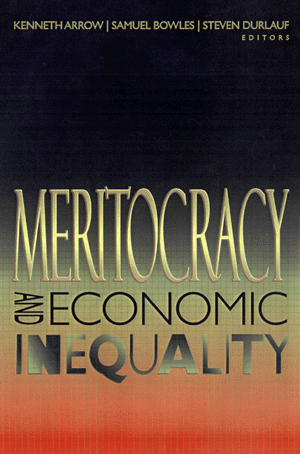 I don't know how many of you out there have read John E. Roemer's (1998) book Equality of Opportunity, or the article of the same name in Arrow, Bowles, Durlauf (eds, 2000) Meritocracy and Economic Inequality. Anyway, I have been trying to think about his arguments for a while (as I am currently researching this topic) and I have a little hypothetical that I want to test to see if anyone thinks it's valid. First I will discuss Roemer's proposal, then on to my hypothetical.
 Roemer first argues that there are two types of equality of opportunity.
- the nondiscrimination principle
- leveling the playing field
 He says that much has been written on the former, but not enough (rigorously) on the latter. Roemer argues for an algorithm, of the sort which takes individuals circumstances into account and then partitions them into typesets, where 'type' is meant to be indicative of level of advantage. He then goes on to argue that the individual's level of effort within their type set is what should determine our policy for receiving benefits. Everyone in the top centile of each type should receive similar outcomes. He argues therefore that his algorithm (which he sets up mathematically I should add) would therefore take types into account and provide for each individual contingent on the effort that they choose to expend and reward them accordingly - a just desert if you will. Now, this is a summary, and a poor one at that, but I think that it is quite an interesting proposition. One of the consequences of which is that disadvantaged individuals will require dramatically more compensation in order to get them to an equivalent level of say education as those who are historically advantaged. Note though that he argues that his EOp mechanism should apply in terms of admissions to schools, universities, etc, but should not apply for professions where a specific level of excellence is required (such as say, surgery, dentistry, high level physics and mathematics). At this point the nondiscrimination principle should be implemented.
 [Aside: he comments how this makes him enemies on the right and left either because he goes too far, or not far enough]
 Hypothetical
Consider a hypothetical individual who is, by virtue of her circumstances (genes, family, etc) excellent at everything. So excellent, in fact, that the effort required by her to perform any task to some pre-defined level of excellence or achievement (say building a car, or coding a computer program) is absolutely minimal. So minimal in fact that it is indistinguishable from effortlessness. Because this person, by virtue of their abilities (qua circumstances) cannot expend more effort, say to the equivalence of others in a different type, how will they be remunerated or rewarded?
Roemer's rule for allocating them to university, employment, 'future earnings capacity' would not allocate them (or at least allocate them to the lowest positions) because they expend (virtually) no effort (or epsilon's worth of effort).
Moreover, as the individual is unique, i.e. they cannot be classified in terms of the given type set, how do we classify them in terms of a decile of effort? Do they necessarily fall in the last decile of some imagined group of super-individuals? Surely that would be inaccurate because, if this group existed, none of them would be able to spend more than (epsilon or) near zero effort.
Moreover, as the individual is unique, i.e. they cannot be classified in terms of the given type set, how do we classify them in terms of a decile of effort? Do they necessarily fall in the last decile of some imagined group of super-individuals? Surely that would be inaccurate because, if this group existed, none of them would be able to spend more than (epsilon or) near zero effort.
Any ideas? Am I just crazy, or because this would only be a problem for superpeople is it not worth considering in the political philosophy of real people? I suppose this is just a variant on the 'not rewarding people who are talented' problem, but the issue for me here is that even if they wanted to they (superpeople) couldn't expend more effort. Conundrum. But quite possibly a trivial one.
Tuesday, July 08, 2008
Cohen Pt.1
Posted by Simon Halliday | Tuesday, July 08, 2008 | Category:
Cohen,
equality,
libertarianism,
Nozick,
Political Philosophy,
Rawls,
Roemer
|
0
comments
Yesterday I published the bibliography and some of the ideas for my research program over the next few months, and realistically as a basis for the next three years. I didn't give many details on account of it simply being a publication of what I am planning to do for the next while. Today I am going to start some of this with a discussion of the first few chapters of G.A. Cohen's (1995) Self-Ownership, Freedom and Equality which will involve a few posts over the next few days. Cohen's main intention in the book is to strip down and assess the concept of self ownership, to relocate the ideology of socialism without self-ownership as proposed by Marx and to argue that Nozick's argument for self-ownership as effective freedom are flawed and that he applies double standards in terms of the arguments Nozick makes in Anarchy, State and Utopia.

Cohen spends his first chapter discussing Nozick's Wilt Chamberlain example. He first proposes that a proper translation of Nozick's proposal that:
"Whatever rises from a just situation by just steps is itself just." (1)to:
Robert Nozick (1971, 161-2)
"Whatever arises from a just situation as a result of fully voluntary transactions on the part of all the transacting agents is itself just." (2)Leaving aside the discussion of slavery arguments that pertain to the above, Cohen voices discontent with Nozick's argument and declares he would be disturbed if,
G. A. Cohen (1995, 21)
"we can see what the agent thinks he is gaining, but we know that what he will gain is not that, but something he think less valuable; or that what results is not only the gain he expects but also unforeseen consequences which render negative the net value, according to his preferences and standards, of the transaction."Moreover, it is necessary for us to attempt to understand whether individuals would have made a decision if they understood the aggregate effects of their choice ex post. For which Cohen issues a re-translation of (1):
G. A. Cohen (1995, 23)
"Whatever arises from a just situation as a result of fully voluntary transactions which all transacting agents would still have agreed to if they had known what the results of so transacting were to be is itself just. " (3)
Cohen, (1995, 23)
With which, it is understandably difficult to argue, the capitalist economy may not be the best able to deal (or any system for that matter, but that is another debate entirely). For which it is also necessary for us to understand that, not only do the Chamberlain fans get to see Chamberlain, but, having paid him, the aggregate result is one that endows Chamberlain with powers over them through the amount of money to which he now has access. It is this effect that Cohen argues would be preferred to be prevented by those living in a socialist society. Cohen argues that a society in which this occurs would be "a society of equality in danger of losing its essential character" Cohen (1995, 26)
Notwithstanding whether one finds the above argument credible or not, Nozick proposes that third parties, not privy to concern about the transactions of others, remain entirely unaffected by the Wilt Chamberlain - Fans transaction. Cohen argues that this is untrue and I believe him. Third parties lose relative position and power without any form of recompense (the fans at least get to watch the game).
Then he proposes a further argument, which I think is more convincing and progresses as follows: could we conceive a world in which individuals paid some price to watch Wilt Chamberlain, but who knew, in addition, that their payment would be taxed and that Chamberlain would not gain disproportionate wealth and power as a consequence (an option that was supposedly not considered by Nozick)? If we assume normal economic rationality then Chamberlain will play if he sees that the wage he receives is adequate relative to the effort he puts in. Moreover, he could enjoy playing for its intrinsic worth to him, i.e. the joy of being a fantastic professional basketball player for which he gains everything from adulation to sheer exhilaration (I grant that such theorizing can lead to tautologies, but this does not mean that it is irrelevant - work selection endogeneity is still neglected in economics).
Then he proposes a further argument, which I think is more convincing and progresses as follows: could we conceive a world in which individuals paid some price to watch Wilt Chamberlain, but who knew, in addition, that their payment would be taxed and that Chamberlain would not gain disproportionate wealth and power as a consequence (an option that was supposedly not considered by Nozick)? If we assume normal economic rationality then Chamberlain will play if he sees that the wage he receives is adequate relative to the effort he puts in. Moreover, he could enjoy playing for its intrinsic worth to him, i.e. the joy of being a fantastic professional basketball player for which he gains everything from adulation to sheer exhilaration (I grant that such theorizing can lead to tautologies, but this does not mean that it is irrelevant - work selection endogeneity is still neglected in economics).

The criticism that follows this is one to do with the psychology of individuals living in the socialist state Cohen argues that "The people in Nozick's state of nature areintelligible only as well.socialized produc.ts of a market society." (1995, 29) He proposes that individuals in a socialist society would hold to different values such that "incessant vigilance against 'capitalistic acts'"(ibid.) would be unnecessary. Cohen asserts that there are different concepts of human nature inherent in Nozick than in socialism. The human nature that would be more prevalent in socialism would be more pro-social. This is, I believe, a flawed argument, for no other reason than the fact that biological and other evidence generally supports individuals being altruistic towards kin and in-groups, rather than all individuals [See, for example, Choi and Bowles (2007) on Parochial Altruism and War, or at the evidence discussed in Eric Beinhocker's The Origin of Wealth if I recall accurately]. So, I think this argument is weak.
In general, Cohen seems to produce a number of valid criticisms of Nozick in this, the content of the first chapter of his book. He also delineates additional arguments on side constraints and on the role of the proletarian in a capitalist society who has freedom, but is effectively unfree. I will probably refer to this topic at a later date when discussing Nozick's idea of self-ownership for individuals in a jointly-owned world and contrasting this with his argument for the freedom of the proletarian. Right now, back to reading.
Monday, July 07, 2008
Research Program
Posted by Simon Halliday | Monday, July 07, 2008 | Category:
Glenn Loury,
Group Inequality,
Political Philosophy,
Rajiv Sethi
|
4
comments
My research program this vacation is, firstly, to complete an essay for the History of Economic Thought seminar course I took with Ernesto Screpanti this past quarter on Equality of Opportunity. Secondly, subsequently and probably somewhat concurrent with that, as the themes overlap, I am pursuing reading and research on group inequality which is the general area I have decided to research for the articles for my thesis.
 [Aside: I was originally trying to decide between research into either the evolution of cooperation, or into group inequality/segregation, I am passionate about both, but chose to do the latter as it relates more to South Africa.]
The implication of which is that I will be blogging about the books and articles that I am reading and the attempts that I make to write about them. With respect to the equality of opportunity essay, and equality generally, I am currently reading or have been reading:
Bowles, Arrow and Durlauf (eds) (2000) Meritocracy and Economic Inequality
Roemer, John, (1998) Equality of Opportunity
Roemer, John, (1996) Theories of Distributive Justice
Cohen, G.A. (1995) Self-Ownership, Freedom and Equality
Rawls, J (2005 (1971)) A Theory of Justice
Nozick, R (1974) Anarchy, State and Utopia

As a political philosophy autodidact the base texts that I read to give myself an introduction were:
Kymlicka, Will Contemporary Political Philosophy: An Introduction
Wolff, Jonathan, An Introduction to Political Philosphy
Miller, David, Political Philosophy A Very Short Introduction
I know that some of the above are a bit simple (eg. the very short intro), but I found it useful to look at slowly advancing texts when I was teaching myself the basics, before getting on to reading the genuine article of Rawls, Nozick, etc.
So that you know one of the main reasons that I am really trying my best to get to grips with these topics is because I believe strongly in having some kind of consistent theory behind the work that I intend to do in economics. Without this grounding I don't know whether the work I do will be out of anything more than curiousity. I agree furthermore with John Roemer when he says that,
So that you know one of the main reasons that I am really trying my best to get to grips with these topics is because I believe strongly in having some kind of consistent theory behind the work that I intend to do in economics. Without this grounding I don't know whether the work I do will be out of anything more than curiousity. I agree furthermore with John Roemer when he says that,
"Unfortunately, too few graduate students today who work in political philosophy or welfare economics have an understanding of both methods. I think that to do good political philosophy o welfare economics it is essential to be cognizant of the main issues and ideas in both disciplines, if not to have both sets of techniques in one's tool kit. Political philosophers with too little knowledge of welfare economics frequently try to reinvent the wheel, usually with bad results. Welfare economists who are poorly read in political philosophy often waste their time on technical questions that philosophy shows have no interest for the study of human welfare."John Roemer, 1998:i, Equality of Opportunity
So, if you are interested in these topics, I am using a somewhat altered version of Jonathan Wolff's reading list on equality.
With respect to group inequality, I am using two reading lists, the first is from Glenn C. Loury for his course on group inequality at Brown, and the second list (which now no longer appears to be online) is from Rajiv Sethi's Inequality course at Columbia.
If you have any suggestions then please feel free to supply them I am open to all kinds of ideas on the abovementioned topics.
With respect to group inequality, I am using two reading lists, the first is from Glenn C. Loury for his course on group inequality at Brown, and the second list (which now no longer appears to be online) is from Rajiv Sethi's Inequality course at Columbia.
If you have any suggestions then please feel free to supply them I am open to all kinds of ideas on the abovementioned topics.
 The ANCYL leaders are all into conspicuous consumption, according to the article 'Bling on the ANC ivy league' from the Mail & Guardian.
 For those of you unfamiliar with the concept, Thorstein Veblen came up with the idea some time ago in his Theory of the Leisure Class. Veblen used the term to highlight the behaviour of the nouveau riche, i.e. they buy new and expensive stuff to show everyone how rich and powerful they now are. With respect to a game theoretic understanding of the concept, it should be understood as something that is rather like an arms race in terms of the theory of positional goods. If I consume conspicuously, it implies that I am in a position above you, which implies that you are consuming a 'negative' amount of reputation/position hierarchically speaking. What is the solution? You feel a need to consume more conspicuously, to spend more and more money to get yourself above me. What does this mean? I must do the same! Hence the arms race analogy.
Veblen: Turning in his Grave
 Another way to think about it is that my consumption and your consumption are strategic complements, i.e. my consumption of the good is increasing in yours and vice versa (i.e. my consumption of x would enter into your utility function and the derivative of your marginal utility with respect to my consumption of x would be positive, to get technical on you). Moreover, we would say that there are negative externality effects, because the effect of my consumption on your utility is negative! So what do we see? You will consume more to attenuate your status anxiety (Bowles, 2004). Poor little you...
What makes all of this so laughable is that the ANCYL discusses empowering the worker, speaking up for the little man. Julius Malema, in reference to ANCYL business concerns, commented (reported in the article) that "if you do away with these activities,
people will understand that being in the youth league does not mean you
are going to be rich". Um, well. Ok. You want to make sure people know that being in the ANCYL won't get you rich, but there you all are arriving in expensive vehicles, with your parades of bodyguards and you want us to believe such empty rhetoric? Try again please.
You may recall that I blogged on Malema recently, along with Zwelinzima Vavi.
 Julius Malema: worried about his lexus...
Sigh!
Why, oh why, can't we have better youth politics?
Ref:
Bowles, S (2004), Microeconomics and Behavior, Russell Sage, New York.
Sunday, July 06, 2008
I was looking through some older comments on my blog that I hadn't paid much attention to and this one came up.
Now, I followed the threads, looked at the ideas and, lo and behold, it was some random punter trying to promote non-skeptical thinking and trying to demean and defame James Randi and others who are skeptical about pseudoscience. He was also posting attacks on Richard Dawkins and evolution. Oh well... Such is life. Such randoms posting on one's blog with their own particularly random and ineffectual methods of attack. He must have seen my blog on the blogroll of the Out Campaign or something. Trolls... Sigh.
Subscribe to:
Posts (Atom)
david mabus said...
TAM 6 Call for papers: James Randi - little blaspheming atheist fraud and his army of robot zombie followers:
visit:
http://www.disclose.tv/forum/viewtopic.php?f=21&t=94
to see how we stopped Randi's MD paranormal challenge....
and FINALLY:
guess what is inside angel's ENVELOPE:
___________________
|
| RANDI'S HEAD
|
___________________
http://www.youtube.com/watch?v=8YXHGGfeVzI